ADHD Routine Tracker Apps: The Ultimate Guide to Breaking Executive Dysfunction with an "External Brain"
Introduction: Why "Just Try Harder" Doesn't Work
You set the alarm for 7:00 AM. It goes off. You snooze it. At 7:30, you know you need to get up, shower, and eat breakfast. But you lie there, scrolling, paralyzed. Your brain screams "Get up!" but your body doesn't move.
Three hours later, you are overwhelmed, guilty, and wondering why you are so "lazy."
Here is the truth: You are not lazy. You have a neurodevelopmental condition that fundamentally alters how your brain perceives time, regulates motivation, and executes tasks.
Attention Deficit Hyperactivity Disorder (ADHD) affects approximately 5–7% of children and 2–4% of adults globally. For millions, the core struggle isn't distraction—it is Executive Dysfunction. This is the brain's inability to plan, prioritize, initiate, and sustain action toward a goal.
But what if you could offload these failing internal functions to an external tool? Enter the Routine Tracker App. This guide provides a deep dive into the neuroscience of ADHD, the research proving digital interventions work, and a step-by-step blueprint for using routine trackers to reclaim your daily life.
Understanding ADHD – The Neurological "Traffic Jam"
To solve a problem, we must first understand its roots. ADHD is not a behavioral choice; it is a biological divergence in brain structure and chemistry.
What is Executive Dysfunction? (The Broken CEO)
ADHD is fundamentally a disorder of executive function dysregulation. If your brain is a company, your executive functions are the CEO—responsible for strategic planning, task initiation, impulse inhibition, working memory, and cognitive flexibility.
In 1997, renowned researcher Russell Barkley established that these deficits lead to poor adaptive functioning, affecting academic performance, career growth, and personal relationships. Critically, Barkley noted that ADHD actively sabotages the patient's ability to seek and stick to treatment. This creates a devastating vicious cycle: the very thing you need to fix (planning) is the thing your brain cannot do.
Time Blindness – When the Brain Loses its Clock
One of the most destructive symptoms of ADHD is Time Blindness. The ADHD brain struggles with the intrinsic timing system, leading to massive difficulties in estimating how long tasks take, remembering past timelines, and projecting into the future.
A comprehensive meta-analysis published in the Journal of Attention Disorders confirmed that ADHD presents moderate to severe timing deficits across the lifespan. This explains the classic ADHD behaviors:
- Underestimating task duration (leading to constant lateness).
- Losing time during hyperfocus (spending 5 hours on a project that should have taken 1).
- Struggling with sequencing (doing "Step 3" before "Step 1").
Pro Tip: If you constantly feel like time is either rushing past you or crawling, you are not imagining it—your internal clock is literally misfiring.
Dopamine and the Broken Reward System
Why is brushing your teeth or replying to an email so excruciatingly hard?
ADHD is characterized by dopamine dysregulation. Dopamine isn't just the "pleasure" chemical; it is the fuel for motivation, reward learning, and habit formation. In the ADHD brain, delayed gratification is neurologically invisible. A reward that is two weeks away holds absolutely zero motivational power today.
This leads to:
- High "activation energy" – Starting a task feels like pushing a boulder uphill.
- Procrastination – Relying on the stress of a last-minute deadline (which spikes adrenaline and dopamine).
- Failed habits – Traditional habit formation (which relies on delayed rewards) simply doesn't stick.
Key Takeaway: You are not broken. You are operating on a different neurochemical operating system. The solution is to build scaffolds that work with this system, not against it.
Why Routine Tracker Apps Fix These Core Problems
A to-do list written on paper relies on your working memory to read, understand, and recall it. That is exactly the function that is impaired. A well-designed routine tracker app, however, acts as an "External Brain" by shifting these cognitive burdens from your internal processor to a digital one.
The 4 Core Mechanisms of an ADHD-Friendly Tracker
1. Visualized Time and Temporal Structuring
Traditional clocks are abstract numbers. ADHD brains need concrete visuals. Apps like Tiimo use color-coded visual planners and gentle, step-by-step reminders to help users visualize their schedule. Research published by the Accessible EU Center (2025) found that visual-based daily structuring significantly supports independent living, particularly praising dynamic visual timers for improving time perception in adolescents.
2. Instant Feedback and Dopamine Triggers
While the ADHD brain ignores future rewards, it responds explosively to instant rewards. Routine trackers leverage this via gamification:
- Streaks – A visual chain of success days.
- Progress Bars – Watching a "Quest" move to 100%.
- Badges & Animations – Micro-celebrations for checking off a task.
Apps like Habitica turn daily habits into motivating challenges by gamifying to-dos—each completed task earns you gold, experience, and items. Finch takes a gentler approach with gamified self-care featuring a virtual pet.
These triggers provide an immediate micro-dose of dopamine, reinforcing the behavior right now, which is precisely how ADHD brains learn best.
3. Reducing Decision Fatigue
ADHD patients make hundreds of micro-decisions a day: "What do I do first? Did I forget something? How do I start?" This mental load is exhausting. A routine tracker pre-decides these choices for you. By creating a pre-set "Morning Flow," you remove the friction of planning and conserve willpower for the actual execution.
4. Externalizing Working Memory
Working memory is the "sticky note" of your brain. For ADHD, this sticky note is small and keeps falling off the fridge. The app becomes an external memory system. You don't need to remember to do the laundry; the app remembers for you and presents the reminder at the right time. The NHS explicitly recommends "environmental scaffolding" (i.e., external memory aids) as a key self-management strategy for ADHD.
Part 3: The Research – Do Apps Actually Work? (Yes, Here's the Proof)
Skeptical about digital health tools? The science is catching up quickly.
Systematic Review Findings (2025)
A rigorous systematic review published in Frontiers in Public Health (2025) analyzed 14 studies on ADHD applications. The findings were clear:
- Apps successfully monitor symptoms and enhance cognitive function.
- Healthcare providers using dedicated apps improved their communication with patients.
- Apps have significant potential as adjunctive tools to traditional therapy and medication, though the authors noted that long-term studies are still needed.
Meta-Analysis of Randomized Controlled Trials (2024)
A 2024 meta-analysis encompassing 25 Randomized Controlled Trials (RCTs) found that digital interventions significantly outperformed control groups in reducing overall ADHD symptoms (Effect size: SMD = −0.33). Furthermore, an RCT targeting children with ADHD found that mHealth-supported exercise rehabilitation significantly improved both core symptoms and executive functions, showing effects comparable to in-person coaching.
The NUMO App Real-World Study
Researchers conducted a quasi-experimental study involving 87 adults with ADHD using the NUMO application (which integrates psychoeducation, task management, and cognitive exercises). The study found that high-usage groups experienced a significant reduction in ADHD symptoms and improved quality of life.
Critical Caveat: The study explicitly noted that consistent engagement is required for optimal results. The tool only works if you show up and use it.
Part 4: The Best ADHD-Friendly Routine Trackers in 2026
Not all apps are created equal. A standard corporate productivity tool will likely frustrate you. Here is a curated list of the top ADHD-friendly routine trackers, including a deep dive into Roz—a rising star in the space.
Roz – The Simple, Step-by-Step Routine Tracker
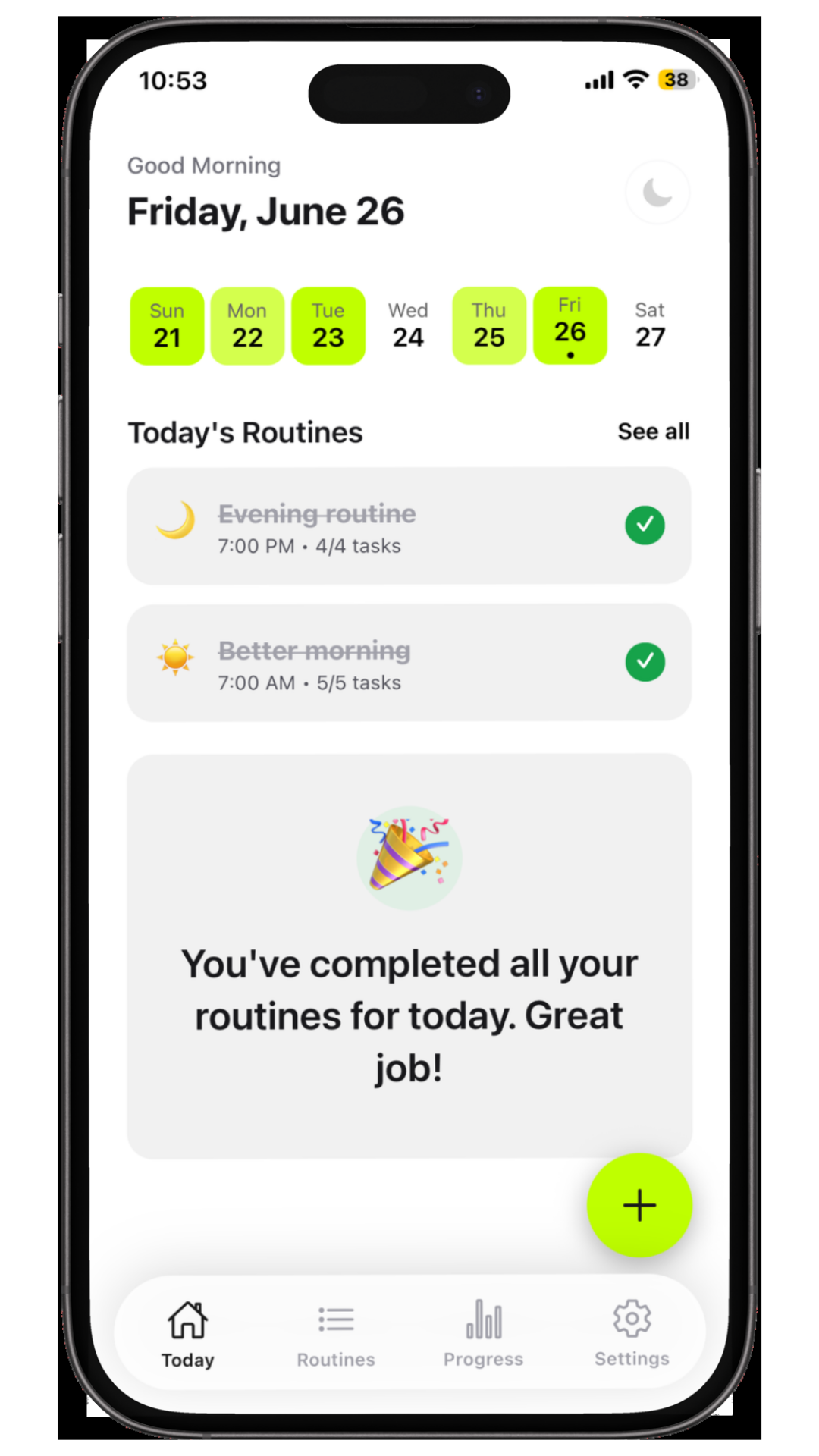
Roz is a habit tracker and daily routine planner built specifically for real people—including those with ADHD, busy schedules, or anyone who's tried and failed to stick to habits before.
What makes Roz different? Most productivity apps stop at lists and reminders. Roz takes a different approach: it guides you through your routine step by step, using timers and smart notifications so you always know what comes next.
Key Features of Roz
Build Your Routine:
- Add daily, weekly, or custom tasks to your morning, afternoon, and evening routines
- Set reminders so nothing slips through the cracks
- Use checklists to stay on track throughout the day
- Schedule routines that actually fit your life
Track What Matters:
- Watch your streak tracker grow—every day counts
- Log your mood and reflect on your progress
- Monitor your habit streaks across multiple goals
- See your weekly progress at a glance in a clean dashboard
Stay Motivated:
- Build momentum with visual streak tracking
- Celebrate milestones and keep your self-improvement on track
- Perfect for daily journaling, habit building, and goal setting
- Designed with ADHD-friendly structure to help you focus and follow through
Why Roz Works for ADHD Brains
The creator of Roz built the app because most productivity apps either overwhelm with 47 features or make you feel guilty by Wednesday. The problem wasn't planning the routine—it was following through.
Roz solves this by:
- Guiding you step by step rather than just showing you a list
- Using timers to combat time blindness
- Sending smart notifications that tell you what comes next
- Keeping everything stored locally on your device, so your data stays private and always available offline
Whether you're building a morning routine, tracking habits, managing your goals, or just trying to bring more structure to your day—Roz gives you the tools to make it stick.
Other Top ADHD-Friendly Apps
Apps Best For ADHD Feature
- Roz: Step-by-step routine guidance
- Timer-guided routines, smart notifications, local data storage
- Tiimo: Visual time management
- Color-coded visual planners, gentle step-by-step reminders, syncs across devices
- Habitica: Gamification motivation
- Turns tasks into an RPG—earn gold, XP, and items for completing habits
- Finch: Gentle self-car
- Gamified self-care with a virtual pet that grows as you complete tasks
- Brili Routines: Morning/bedtime sequences
- Visual planner + timer based on CBT best practices
- Done: Goal progress tracking
- Simple goal tracking with visual progress indicators
- Rou: Minimalist checklists
- No habit tracking pressure, calm and frictionless design
Part 5: The 5-Step Action Plan – How to Start Today
Starting a new app can feel overwhelming. Do not try to organize your entire life in one day. Follow this neurodivergent-friendly guide instead:
Step 1: Choose ONE App (Not Three)
Analysis paralysis is the enemy. Pick just one app from the list above. Roz is an excellent starting point because it focuses on guiding you through routines rather than overwhelming you with features. Download it, set up your profile, but do not add any tasks yet.
Step 2: Build a "Micro-Routine"
Do not build a full workday. Start with the "First 10 Minutes of Waking Up."
- Keep it to 3-5 steps (e.g., 1. Sit up, 2. Drink water, 3. Stretch, 4. Open curtains).
- Use the "Habit Stacking" technique—attach the new app check-ins to an existing physical action (like turning off the alarm).
- With Roz, you can schedule routines that actually fit your life.
Step 3: Set Visual and Audio Alerts
- Enable persistent notifications (the kind that stay on your lock screen).
- Use the app's timer feature to time your Micro-Routine (e.g., 10 minutes). Roz uses timers to guide you through each step.
- Rule: When the reminder goes off, you must do the first step immediately (the 5-second rule). Do not think about the rest—just Step 1.
Step 4: Celebrate the Check-Off (Seriously)
- When you check off that first task, pause for 3 seconds and feel the satisfaction.
- Watch your streak grow. Roz's visual streak tracking helps you build momentum.
- If you miss a day, do not reset. Most good apps allow "rest days" without losing your streak. Remember: Imperfect consistency beats perfect sporadicity.
Step 5: Weekly Review (Sunday Night)
- Spend 5 minutes reviewing what you tracked.
- Ask: "What was easy? What did I avoid?"
- Adjust the routine based on this data. The app is there to serve your brain, not the other way around.
- With Roz, you can log your mood and reflect on your progress, making weekly reviews more insightful.
Conclusion: Technology as a Bridge, Not a Cure
A routine tracker is not a magic wand. It cannot replace medication, professional therapy, or healthy lifestyle habits. However, for the millions of ADHD brains struggling with the daily "chaos cycle," these apps are arguably the most powerful cognitive prosthetic available today.
Roz represents a new wave of ADHD-friendly tools—apps that don't just help you plan your day but actually guide you through it, step by step. By externalizing structure, providing instant feedback, and visualizing the invisible nature of time, these apps allow the ADHD brain to do what it cannot do alone: bridge the gap between intending to act and actually acting.
Start small. Be kind to yourself. And remember—the only "bad" day with a routine tracker is the day you don't try.
Frequently Asked Questions (FAQ)
Q: Can these apps replace my ADHD medication?
A: No. While apps are excellent behavioral supports, they are adjunctive tools. Always consult your psychiatrist regarding medication adjustments.
Q: I keep forgetting to open the app. What do I do?
A: Put the app widget on your phone's home screen (not buried in a folder). Set an alarm with a specific label like "Open [App Name]." The first step to using the app is simply opening it.
Q: What makes Roz different from other habit trackers?
A: Most productivity apps stop at lists and reminders. Roz guides you through your routine step by step using timers and smart notifications, so you always know what comes next. It's designed specifically for people who've tried and failed to stick to habits before.
Q: I tried a habit tracker before and it didn't work. Why?
A: Generic productivity apps often lack the visual timing and gamification elements crucial for ADHD. Ensure you are using a tool specifically designed for neurodivergent brains—like Roz, Tiimo, or Habitica.
Q: Are there free options available?
A: Yes! Roz is available on the App Store with in-app purchases for premium features. Finch has a robust free version. Habitica is completely free. Tiimo and Brili offer free trials.
References & Further Reading (Clickable Links)
1. Barkley, R.A. (1997). ADHD and the Nature of Self-Control. Guilford Press.
2. Faraone, S.V. et al. (2021). The World Federation of ADHD International Consensus Statement. Neuroscience & Biobehavioral Reviews.
3. Hosseinnia, M. et al. (2025). Applications for ADHD: a systematic review. Frontiers in Public Health.
4. NICE Guideline NG87: Attention deficit hyperactivity disorder: diagnosis and management.
5. Orel, O. (2024). Study of NUMO application effectiveness in ADHD adults. BPA Bulletin.
6. Privošnik, P. & Kiswarday, V.R. (2025). Mobile App for Adolescents with ADHD. Accessible EU Center.
7. Liu, X. et al. (2024). Digital interventions for ADHD: A meta-analysis of RCTs. Journal of Affective Disorders.
App Links:
- Roz: rozapp.co | App Store
- Tiimo: tiimoapp.com
- Habitica: habitica.com
- Finch: finchcare.com
Recommended Trusted Resources:
- CHADD (Children and Adults with ADHD)
- ADDA (Attention Deficit Disorder Association)
- NHS ADHD Guide (UK)
- Understood.org – ADHD & Executive Function
Enjoyed this guide? If you found it helpful, share it with someone who might be struggling. Breaking the chaos cycle starts with the first step—and you just took it.

Ready to build habits that stick?
Join thousands of people with ADHD using Roz to track routines and build streaks.
Get started freeMore from the blog
View all in guide
Good Work Routines: 7 Workout Routine Examples + A Tracking System
A good workout routine reduces friction, protects your time, and builds momentum. But here's what separates people who stick with workout routines for months versus those who quit after two weeks: they track it
 Ahmer Saud
How a Simple Night Routine Can Transform Your Sleep
When you repeat the same sequence of activities every evening, your body begins to recognize that sleep is approaching. Over time, these repeated cues help your brain transition into a relaxed state, making it easier to fall asleep consistently.
Ahmer Saud
Do Routines Really Help with Anxiety? What the Research Says
Let's dig into the science, the mechanisms, and how to use routines specifically to manage anxiety.
Ahmer Saud