How a Simple Night Routine Can Transform Your Sleep
Most people don't struggle to sleep because they don't know what to do.
They struggle because by the end of the day, they're mentally exhausted.
You tell yourself you'll read a book instead of scrolling. Maybe you'll stretch for a few minutes or prepare for tomorrow. Instead, you pick up your phone "for just five minutes," and suddenly it's midnight.
If that sounds familiar, you're not alone.
The problem usually isn't bedtime itself—it's everything that happens before it.
A simple, consistent night routine helps your brain switch from work mode to rest mode, making it easier to fall asleep, wake up refreshed, and feel less stressed. The challenge isn't knowing what a good routine looks like. The challenge is following it consistently.
After spending years designing Roz—a routine planner built to help people create sustainable daily habits—I noticed the same pattern repeatedly. People rarely failed because they lacked motivation. They failed because every evening required dozens of tiny decisions. By the time bedtime arrived, they were mentally drained.
That's exactly why structure matters.
Why Night Routines Work
Your brain loves predictable patterns.
When you repeat the same sequence of activities every evening, your body begins to recognize that sleep is approaching. Over time, these repeated cues help your brain transition into a relaxed state, making it easier to fall asleep consistently.
Research has shown that maintaining a regular sleep schedule and following good sleep hygiene practices can improve sleep quality and overall well-being. Rather than relying on motivation every night, your body begins responding automatically to familiar routines.
A simple night routine can help you:
- Fall asleep faster
- Reduce evening stress
- Improve sleep quality
- Wake up with more energy
- Reduce late-night phone use
You don't need an elaborate 20-step routine.
You just need a few habits performed consistently.
Why Most People Fail
Most routines don't fail because they're bad.
They fail because they require too many decisions.
After an entire day of work, school, meetings, and responsibilities, your brain doesn't want another list of choices.
Should I read?
Should I meditate?
Should I journal?
Maybe I'll just check Instagram first...
One decision becomes ten, and before you know it, your routine disappears.
While building Roz and talking to hundreds of users, one trend stood out: almost everyone knew what they wanted to do. The difficult part wasn't knowledge—it was remembering what came next and staying focused long enough to finish.
Consistency isn't about having more discipline.
It's about removing unnecessary friction.
A Simple Night Routine Anyone Can Follow
Instead of creating a complicated checklist, start with three or four activities.
For example:
- Put your phone away
- Wash up or shower
- Read for 20 minutes
- Go to bed at the same time every night
That's enough.
If journaling helps you clear your mind, include it.
If stretching helps you relax, add that instead.
Your routine should fit your lifestyle—not someone else's.
The best routine is the one you can realistically repeat tomorrow.
Where Roz Fits In
Knowing what to do is easy.
Remembering to do it every night is the difficult part.
Roz was designed to remove that mental effort.
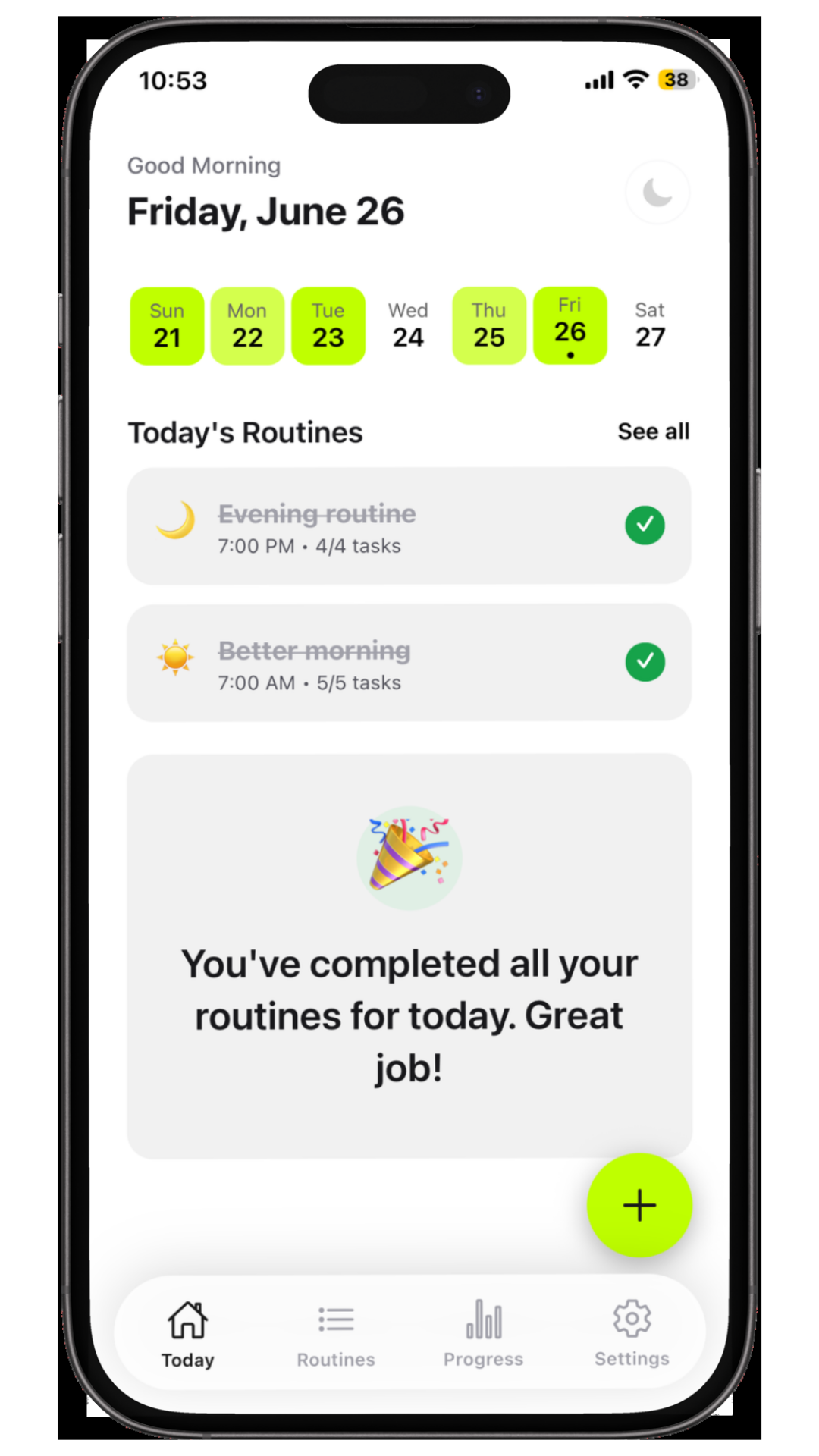
Instead of expecting you to remember every step of your evening routine, Roz guides you through it one task at a time.
When your routine starts, you'll receive a reminder.
Open the app, and your first task appears.
Complete it.
The next task appears automatically.
No guessing.
No decision-making.
No wondering what comes next.
Each activity includes its own timer, helping you stay focused without constantly checking the clock or getting distracted.
Instead of relying on willpower, you're simply following a system you've already created.
Track Progress That Actually Matters
One missed night doesn't erase your progress.
Real habits are built over weeks and months, not days.
Roz helps you track completed routines so you can see your consistency over time instead of relying on memory.
Many users are surprised to discover that small improvements—following a routine four or five nights a week instead of none—often make a noticeable difference.
Progress is easier to maintain when you can actually see it.
Keep It Flexible
Life isn't perfect.
Some evenings you'll skip reading.
Some nights you'll work late.
Some days you'll simply be too tired.
That's okay.
A routine should adapt to your life—not punish you for having one.
Roz lets you customize every routine with your own tasks, durations, reminders, and schedule so it works around your lifestyle instead of forcing you into someone else's idea of productivity.
Create Your Night Routine in Five Minutes
Getting started is simple.
- Create a routine called Night Routine.
- Choose the time you'd like to begin each evening.
- Add three or four calming activities.
- Set a reminder.
- Start tonight.

Don't try to build the perfect routine.
Build one you'll actually follow.
You can always improve it later.
Final Thoughts
A better night's sleep doesn't begin when your head touches the pillow.
It begins with the small choices you make before you get there.
Start with one simple routine.
Keep it consistent.
Make it easy enough that you can repeat it tomorrow.
Over time, those small actions become habits—and habits become part of who you are.
If you'd like a little extra structure, Roz can guide you through every step, helping you spend less time deciding what to do and more time actually doing it.
Learn More
If you'd like to dive deeper into sleep science and healthy evening habits, these evidence-based resources are a great place to start:
- Centers for Disease Control and Prevention (CDC) – Sleep and Sleep Disorders
https://www.cdc.gov/sleep/ - National Institutes of Health (NIH) – Healthy Sleep
https://www.nhlbi.nih.gov/health/sleep - Sleep Foundation – Sleep Hygiene
https://www.sleepfoundation.org/sleep-hygiene - American Academy of Sleep Medicine – Healthy Sleep Tips
https://sleepeducation.org/
If you're looking for a structured way to put these ideas into practice, you can also explore Roz, where you can build custom night routines, receive reminders, and track your consistency over time.
- Roz – Night Routine Guide
https://rozapp.co/for/night-routine - Roz – Download the App
https://rozapp.co/

Ready to build habits that stick?
Join thousands of people with ADHD using Roz to track routines and build streaks.
Get started freeMore from the blog
View all in guide
Good Work Routines: 7 Workout Routine Examples + A Tracking System
A good workout routine reduces friction, protects your time, and builds momentum. But here's what separates people who stick with workout routines for months versus those who quit after two weeks: they track it
 Ahmer Saud
ADHD Routine Tracker Apps: The Ultimate Guide to Breaking Executive Dysfunction with an "External Brain"
You set the alarm for 7:00 AM. It goes off. You snooze it. At 7:30, you know you need to get up, shower, and eat breakfast. But you lie there, scrolling, paralyzed. Your brain screams "Get up!" but your body doesn't move.
Ahmer Saud
Do Routines Really Help with Anxiety? What the Research Says
Let's dig into the science, the mechanisms, and how to use routines specifically to manage anxiety.
Ahmer Saud