How to Actually Build Habits That Stick: The Atomic Habits Framework Explained
Introduction: Why Most People Fail at Building Habits
You've tried building habits before. Maybe it was "exercise 5 days a week," "read for 30 minutes daily," or "journal every morning." And then? Life happened. You missed a day, then two, and by week three the habit was dead.
The problem isn't willpower—it's system design.
Most people approach habit-building backward. They focus on the outcome (I want to be fit) or the action (I need to run more), but they ignore the fundamental truth James Clear lays out in Atomic Habits: tiny changes, remarkable results—if you have the right framework.
This article breaks down the Atomic Habits system that thousands of users are using to transform their daily routines. By the end, you'll have a clear roadmap to design habits that actually stick, not through motivation, but through structure.
What Are Atomic Habits?
Atomic habits are small, incremental changes in behavior that compound over time. The word "atomic" is intentional—it means "the smallest possible unit." An atomic habit isn't "get fit"; it's "do 2 push-ups before my morning coffee."
Here's why this matters: Most people overestimate what they can do in a year, but underestimate what they can do in 5 years with tiny, consistent improvements.
A 1% improvement every day = 37x better in a year (1.01^365 = 37.78). That's the power of atomic habits.
But atomic habits only work if they're systematic. And that means understanding the four laws of habit formation.
The Four Laws of Habit Formation
James Clear's framework breaks habit building into four stages: cue, craving, response, and reward. Understanding each one is essential.
1. The Cue (Make It Obvious)
A cue is the trigger that initiates a habit. It can be a time of day, a location, an emotion, or even another habit.
Examples:
- 🕒 Time: "Every morning at 6 AM" (wake up)
- 📍 Location: "After I sit at my desk" (open email)
- 😊 Emotion: "When I feel stressed" (go for a walk)
- 🔗 Existing habit: "After I pour my first coffee" (take vitamins)
The first law says cues should be obvious. The more visible the cue, the easier the habit. If you want to drink more water, put a water bottle on your desk where you'll see it every time you look up. If you want to meditate, put your meditation cushion right next to your bed.
2. The Craving (Make It Attractive)
A craving is the motivational force behind a habit. You don't crave the habit itself—you crave the outcome the habit delivers.
You don't crave running; you crave the energy boost or the sense of accomplishment that follows.
Make habits attractive by:
- Pairing a habit you want to build with one you already enjoy (habit stacking)
- Example: "After I do 5 minutes of stretching, I get to drink my favorite tea"
- Reframing the habit's benefit: "I'm building discipline" instead of "This is painful"
3. The Response (Make It Easy)
The response is the actual behavior—the habit itself. The third law says: make it easy.
Most people fail because they set habits that are too ambitious. "I'll work out 90 minutes daily" sounds great on January 1st and laughable by January 8th.
Make it easy by:
- Reducing friction: Don't go to the gym 20 minutes away—exercise in your living room
- Starting incredibly small: 2 push-ups instead of 50. One page of reading instead of a chapter
- Using your environment: Keep gym clothes visible, not buried in a drawer
- Automating when possible: Set a phone reminder instead of relying on memory
The key insight: You want to reach the point where not doing the habit feels harder than doing it.
4. The Reward (Make It Satisfying)
A reward is the immediate payoff that reinforces the behavior. Your brain needs to associate the action with a positive feeling right away—not months later when you've lost 10 pounds.
Effective rewards:
- ✅ A checkmark on a habit tracker (satisfying, visual feedback)
- 🎉 A small treat you enjoy (coffee, chocolate, 10 minutes of a show)
- 📊 Seeing progress documented (streak counter, weekly summary)
- 🎉 Public accountability (telling a friend, sharing progress)
The reward doesn't have to be big. It has to be immediate and consistent.
The Identity-Based Approach: Who Do You Want to Become?
Here's something most habit articles miss: the foundation of lasting habits is identity, not outcomes.
Most people say, "I want to run a marathon" or "I want to read more." But Clear argues that you'll never sustain a habit by focusing on the outcome. Instead, you need to think about the person you're trying to become.
You don't become a runner by running. You become a runner by thinking of yourself as someone who runs.
How to Use Identity to Build Habits
- Define your identity: What kind of person would naturally have this habit? A reader? A disciplined person? Someone who values health? Someone organized?
- Make small decisions as that person: Each decision is a vote for that identity. When you choose to read instead of scroll, you're voting for "I'm a reader." When you choose to move your body, you're voting for "I'm someone who prioritizes health."
- Stack these votes over time: After 21 decisions, you are that person. Your identity shifts, and the habit becomes automatic.
This is why tracking matters so much—each check on your habit tracker is a vote for your desired identity.
How to Design a Habit: The Step-by-Step System
Now that you understand the theory, here's how to design a habit that actually works.
Step 1: Identify Your Cue (The Trigger)
Pick an existing habit or a time of day that already happens reliably. This is your anchor.
Examples:
- After I brush my teeth
- After I pour my morning coffee
- After I sit at my desk
- After I close my laptop at 6 PM
Step 2: Define the Action (Keep It Small)
Make your habit ridiculously easy to start. Seriously. 2 push-ups. 5 minutes of reading. 10 seconds of meditation.
The goal at the beginning is consistency, not intensity. You can expand later.
Step 3: Choose Your Reward (Make It Immediate)
Pick a small, immediate reward that reinforces the behavior. It works best if it's something you can do right after the habit.
Real examples:
- Habit: Drink a glass of water after waking up → Reward: Make your favorite tea afterward
- Habit: 5 minutes of journaling → Reward: Mark it off on a habit tracker (yes, the tracker itself is the reward)
- Habit: 10 push-ups → Reward: Listen to your favorite song
Step 4: Plan for Obstacles (Expect Failure)
You will face obstacles. Plan for them now, and you won't break your streak.
Common obstacles:
- Traveling or schedule change → Backup plan: Do the habit in the hotel room
- Sick day → Backup plan: Do a modified version (1 push-up instead of 5)
- Forgot the habit → Backup plan: Do it later in the day
- Lost motivation → Backup plan: Reference your identity (this is who you are)

The Tracking System: Why Your Habit Tracker Matters
Data is demotivating when it goes down. But when you're just starting a habit, you only want to track the action, not the results.
Track: Did I do the habit? Yes or no.
Don't track: Did I lose weight? Did I get stronger? Did I read a full book?
The goal for the first 4 weeks is consistency over quality. A visual representation of your streak—even a simple checklist—is one of the most powerful motivators humans have.
Weekly Reflection
Once a week, review your tracker. Ask:
- What went well?
- Where did I struggle?
- What small change could I make next week?
This isn't about perfection—it's about learning and adjusting.

The Most Powerful Habit Strategy: Habit Stacking
Habit stacking is when you attach a new habit to an existing one. It's like finding a free anchor point.
The formula is simple:
Current Habit + New Habit
Examples:
- After I pour my morning coffee → I drink a glass of water
- After I sit at my desk → I write down my top 3 priorities
- After I close my laptop → I do 10 push-ups
- After I brush my teeth → I do 5 minutes of meditation
This works because:
- The existing habit is the cue (it already happens automatically)
- You're minimizing friction (you're already there, might as well do the new habit)
- You're building identity through small, consistent decisions
Putting It All Together: Your 14-Day Challenge
Building a habit doesn't happen overnight, but 14 days is enough to create initial consistency. Here's your roadmap:
Days 1–3: Honeymoon phase. It feels easy because you're excited. Don't increase difficulty.
Days 4–7: Motivation dips. This is when people quit. Stick to your reward system and remind yourself why (identity).
Days 8–10: Second wind. You're seeing progress. You might be tempted to do more—resist this. Stay consistent at your small level.
Days 11–14: The habit is becoming automatic. You're not relying on motivation anymore; you're just doing it.
By day 14, the habit wiring is starting to solidify. Keep going.

Tools That Make Habit Building Easier
You can build habits with just a notebook and a pen. But having the right tool removes friction and provides immediate visual feedback.
A good habit tracker should:
- ✅ Make tracking effortless (one tap, not multiple steps)
- 📊 Show your progress visually (streaks, weekly summaries, charts)
- 🎯 Help you understand patterns (which days do you miss? Why?)
- 🔄 Work for ADHD brains (if you have one, you know motivation is unreliable—your system needs to compensate)
The Atomic Habits playbook we've described here? You don't need to memorize it. You just need to follow the template.
Final Thought: Atomic Habits Is a System, Not Motivation
Most habit articles end with "just believe in yourself!" But that's not how this works.
Atomic habits works because it's a system, not a mindset.
You don't need to believe in yourself. You need to:
- Make the cue obvious
- Make the behavior attractive (or at least not painful)
- Make it easy (ridiculously easy)
- Make it rewarding (immediately)
Do this consistently, and your brain will do the rest.
The compound effect of 1% improvements is real. In 90 days, you'll look back and wonder how you ever lived without this habit. In a year, you'll be a different person.
Start today. But start small.
Ready to Build Better Habits?
The framework above works. But implementing it requires tracking, reflection, and adjusting. That's where the Atomic Habits Playbook comes in.
It's a step-by-step workbook that walks you through:
- Defining your desired identity
- Creating your habit blueprint (cue → action → reward)
- Building a balanced daily routine (essential, important, growth, and fun habits)
- Planning for obstacles before they happen
- Tracking your progress over 14 days
[Download the Atomic Habits Playbook →] (Free PDF)
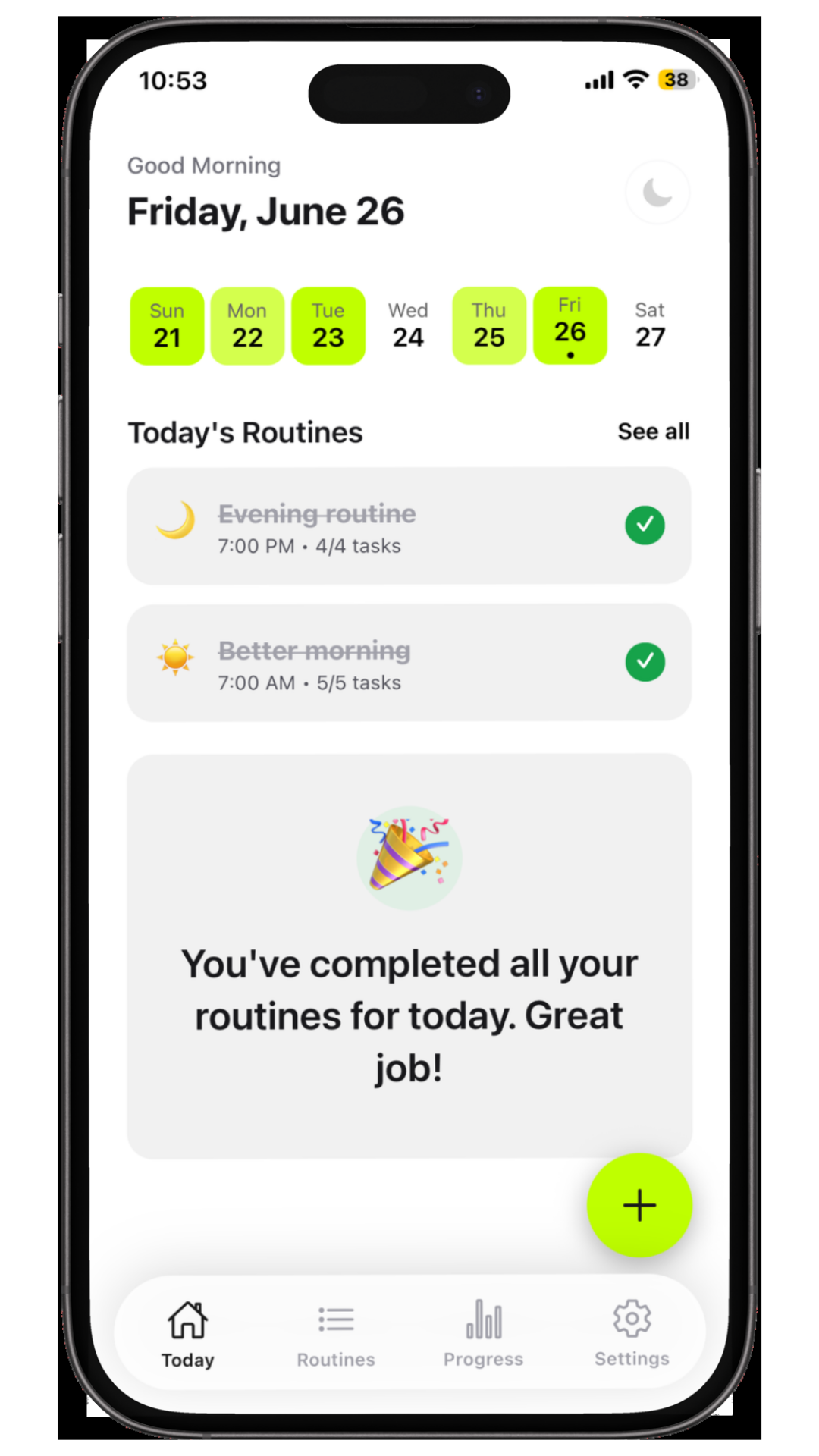
Or, if you want to track habits digitally with reminders, streak tracking, and weekly insights built-in, try Roz—an ADHD-friendly habit tracker designed for people who know motivation is temporary, but systems are forever.

Ready to build habits that stick?
Join thousands of people with ADHD using Roz to track routines and build streaks.
Get started freeMore from the blog
View all in templates
How Do I Keep Track of My Daily Routine? A Complete Guide
Why Routine Tracking Works (It's Not Magic) Before we dive into how to track, let's understand why it matters.
 Ahmer Saud